

Ever launched a landing page you were sure would convert — only to watch visitors vanish like party guests sneaking out early?
Frustrating, right?
Here’s the hard truth: what you think works often doesn’t. That sleek headline, that flashy call-to-action button, or that “perfect” layout — they’re all just guesses until you test them.
That’s where A/B testing becomes a game-changer for marketers.
Instead of debating opinions like “Blue buttons convert better,” you let real users decide with their clicks. Data-driven insights replace assumptions, and measurable results replace endless debates.
In this guide, we’ll explore the most effective A/B testing strategies for landing pages — the tactics that can transform your page from a leaky bucket into a high-converting machine.
What is A/B Testing?
Basic Concept of A/B Testing
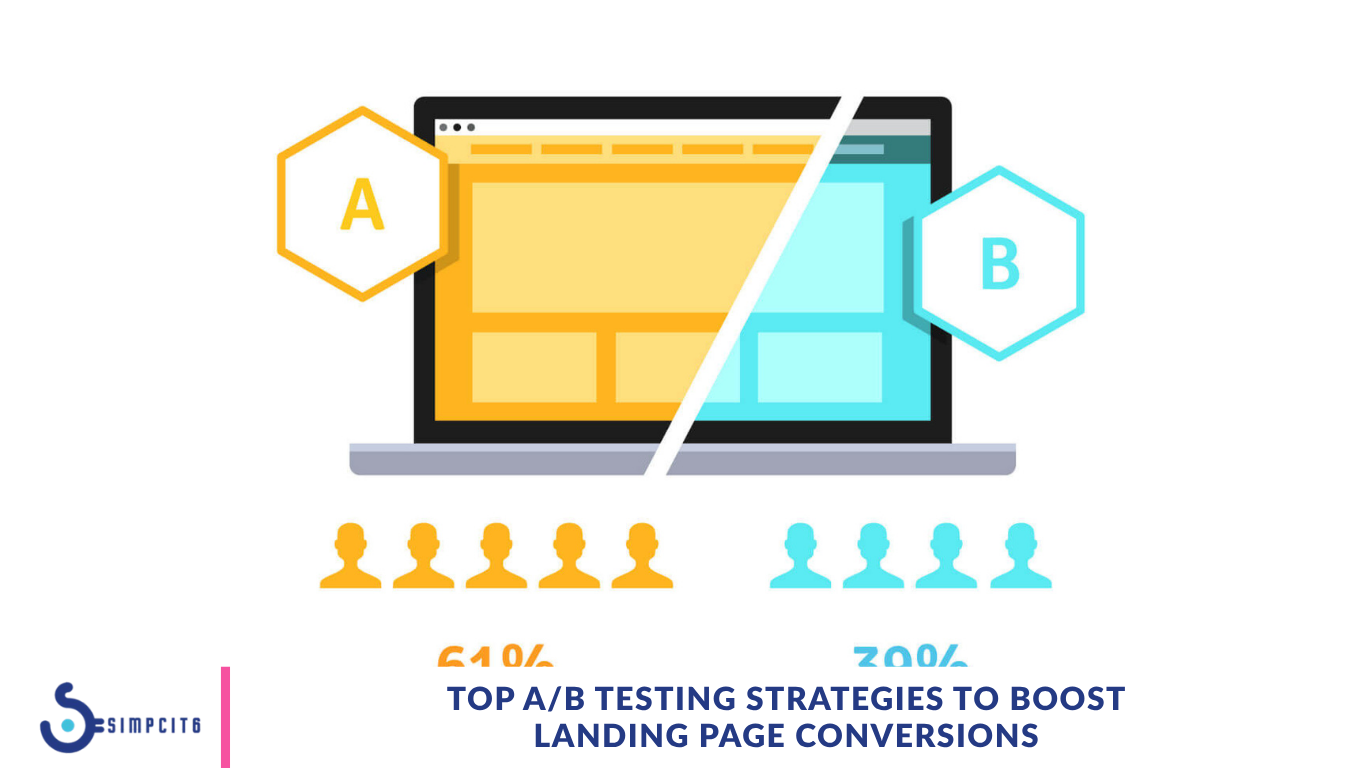
A/B testing, also known as split testing, is straightforward:
You create two versions of your landing page:
- Version A → Original
- Version B → Modified
Half of your visitors see Version A, and the other half see Version B. You then track which version drives higher conversions or engagement.
Think of it as a controlled experiment — same audience, same timing, one intentional change.
A/B Testing vs. Multivariate Testing
These two are often confused:
- A/B Testing → Focuses on one major change at a time
- Multivariate Testing → Tests multiple elements simultaneously
If A/B testing is like comparing two outfits, multivariate testing is like mixing shirts, shoes, jackets, and hats all at once.
For most landing pages, especially those with moderate traffic, A/B testing remains the most effective way to optimize conversions.
Benefits of A/B Testing Landing Pages
Conversion Rate Optimization (CRO)
Even small improvements can compound into big results.
A 2% increase in conversion rate today could translate into thousands of extra dollars in revenue over the course of a year. That’s not just tweaking — that’s scaling your business intelligently.
Enhanced User Experience
High-performing landing pages share common traits:
- Clear messaging
- Simple, intuitive navigation
- Compelling calls-to-action
When your page works better for users, everyone wins — more engagement for them, more conversions for you.
Lower Bounce Rates
Visitors leave a page instantly when something feels off.
A/B testing uncovers these hidden friction points so you can fix issues that silently hurt conversions and keep users engaged longer.
Preparing for a Successful A/B Test
Jumping into A/B testing without a plan is like cooking without a recipe — messy, unpredictable, and unlikely to deliver results.
Define Clear Goals
Before you start, ask yourself:
- What specific outcome am I optimizing for?
- Sign-ups, purchases, demo requests, or click-throughs?
Without a clear goal, your test results are meaningless.
Identify Key Metrics
Focus on metrics that matter for your landing page performance and business outcomes:
- Conversion rate
- Bounce rate
- Time on page
- Click-through rate
- Form completion rate
Choose metrics that directly impact revenue or engagement.
Formulate a Hypothesis
A strong A/B testing hypothesis is:
- Specific — clearly defines what you’re testing
- Logical — based on data or user behavior
- Testable — measurable with real metrics
For example: “Changing the CTA button color from green to orange will increase click-through rates by at least 10%.”
High-Impact Elements to Test
Not all changes on your landing page have the same effect. Focus on the areas that drive the most conversions.
Headlines
Your headline is your first impression — part handshake, part elevator pitch, part value proposition.
Test different approaches:
- Benefit-driven vs feature-driven
- Short vs long
- Emotional vs direct
A strong headline can significantly increase engagement and conversions.
Call-to-Action (CTA)
Your CTA button is a decision trigger. Even small tweaks can have a huge impact.
Test variations in:
- Text (“Get Started” vs “Try Free”)
- Color and design
- Size
- Placement
Sometimes a single word can double your conversion rate.
Images & Visuals
Humans process visual content faster than text, making images critical for landing page performance.
Test:
- Product images vs lifestyle images
- Static vs dynamic visuals
- With people vs without people
Ask yourself: Does your audience want to see the product itself or themselves using it?
Page Layout
The structure of your page guides user attention and flow.
Test:
- Long-form vs short-form content
- Single-column vs multi-column layouts
- CTA placement above or below the fold
Well-structured pages make it easier for visitors to take action.
Forms
Forms are often conversion blockers. Optimizing them is critical.
Test:
- Fewer fields
- Multi-step vs single-step forms
- Different field labels
Shorter, simpler forms usually perform better, but always test to confirm.
Social Proof
People trust other people. Adding social proof builds credibility and reduces hesitation.
Test:
- Testimonials
- Customer reviews
- Client logos
- Case studies
Strong social proof can significantly boost conversion rates.
Read also: Intelligent Video Telematics – Reinventing Fleet Safety for Smarter Operations
Best A/B Testing Strategies
Test One Variable at a Time
Changing your headline, image, and CTA all at once makes it impossible to know which change actually drove results. Focus on one variable per test — clarity beats chaos, and accurate insights beat guesswork.
Prioritize High-Traffic Pages
More traffic equals faster, more reliable results. Testing a page with 20 visitors per day is like waiting for rain in a desert. Start with pages that already get significant traffic to gather meaningful data quickly.
Start with Big Changes
Avoid wasting time on minor tweaks such as adjusting button corners by a few pixels. Instead, focus on high-impact elements first:
- Completely new headline
- Fresh page layout
- Alternative value proposition
Big changes lead to big learnings and faster improvements.
Ensure Statistical Significance
Random fluctuations happen. Wait until your data confidence is strong before declaring a winner. This ensures you are making decisions based on real results rather than noise.
Run Tests Long Enough
User behavior varies throughout the week, and ad campaigns fluctuate. Allow your tests enough time to capture real patterns — weekday vs weekend differences matter. Patience ensures reliable and actionable results.
Common A/B Testing Mistakes
Stopping Tests Too Early
Early results can be misleading. Patience ensures your data is accurate and your decisions are based on real trends, not random fluctuations.
Testing Trivial Changes
Minor tweaks rarely drive meaningful improvements. Focus on high-impact changes that affect conversions, not purely aesthetic adjustments.
Ignoring Mobile Users
Desktop behavior is not the same as mobile behavior. Always analyze performance across devices to ensure your landing page converts well for all users.
Advanced Optimization Techniques
Personalization Testing
Deliver different landing page versions based on user context, such as:
- Location
- Traffic source
- User behavior
Personalized experiences often drive higher engagement and conversion rates.
Behavioral Segmentation
New visitors and returning visitors behave differently. Design A/B tests tailored to each segment to uncover insights that improve overall performance.
Sequential Testing
Instead of splitting traffic randomly, test Version A first, then Version B, and compare results.
This approach is especially useful when traffic is limited, allowing you to maximize learning from smaller audiences.
Tools for A/B Testing
You don’t need to create tests from scratch. Several popular A/B testing tools make setup and analysis easier:
- Google Optimize alternatives
- VWO (Visual Website Optimizer)
- Optimizely
- Convert
For best results, pair these tools with analytics platforms to gain deeper insights and make data-driven decisions.
Real-World Example
A SaaS company tested the following call-to-action (CTA):
- Original CTA: “Submit”
- Variant CTA: “Start My Free Trial”
Result: 38% increase in conversions.
Why the improvement?
“Submit” feels transactional and generic, while “Start My Free Trial” communicates value and opportunity.
This shows that word choice matters — even small changes can have a big impact on your landing page performance.
Frequently Asked Questions
What is A/B testing for landing pages?
A/B testing, also called split testing, is the process of creating two versions of a landing page to see which performs better in driving conversions, clicks, or other key metrics.
Why is A/B testing important for conversions?
It allows you to make data-driven decisions, replacing assumptions with insights from real user behavior, ultimately increasing conversion rates and ROI.
Which landing page elements should I test first?
Focus on high-impact elements like headlines, CTA buttons, images, page layout, and forms. These usually have the biggest effect on conversions.
How do I create a strong A/B testing hypothesis?
A strong hypothesis is specific, testable, and logical. For example: “Changing the CTA button from ‘Submit’ to ‘Start Free Trial’ will increase clicks by at least 20%.”
How long should an A/B test run?
Run tests long enough to account for variations in traffic and user behavior, including weekdays vs weekends. Typically, tests should continue until statistical significance is reached.
Can I test multiple changes at once?
Testing multiple changes simultaneously is called multivariate testing. For most landing pages, A/B testing one variable at a time provides clearer insights and more reliable results.
How do I measure success in A/B testing?
Track key metrics like conversion rate, bounce rate, time on page, click-through rate, and form completion rate. Focus on metrics that directly impact business goals.
Conclusion
A/B testing is the cornerstone of data-driven landing page optimization. By systematically testing headlines, CTAs, images, layouts, and forms, you replace guesswork with real insights that drive higher conversions.
Start with high-impact changes, test one variable at a time, and ensure statistical significance before making decisions. Personalization, segmentation, and thoughtful experimentation can turn even a moderately performing landing page into a conversion powerhouse.
