

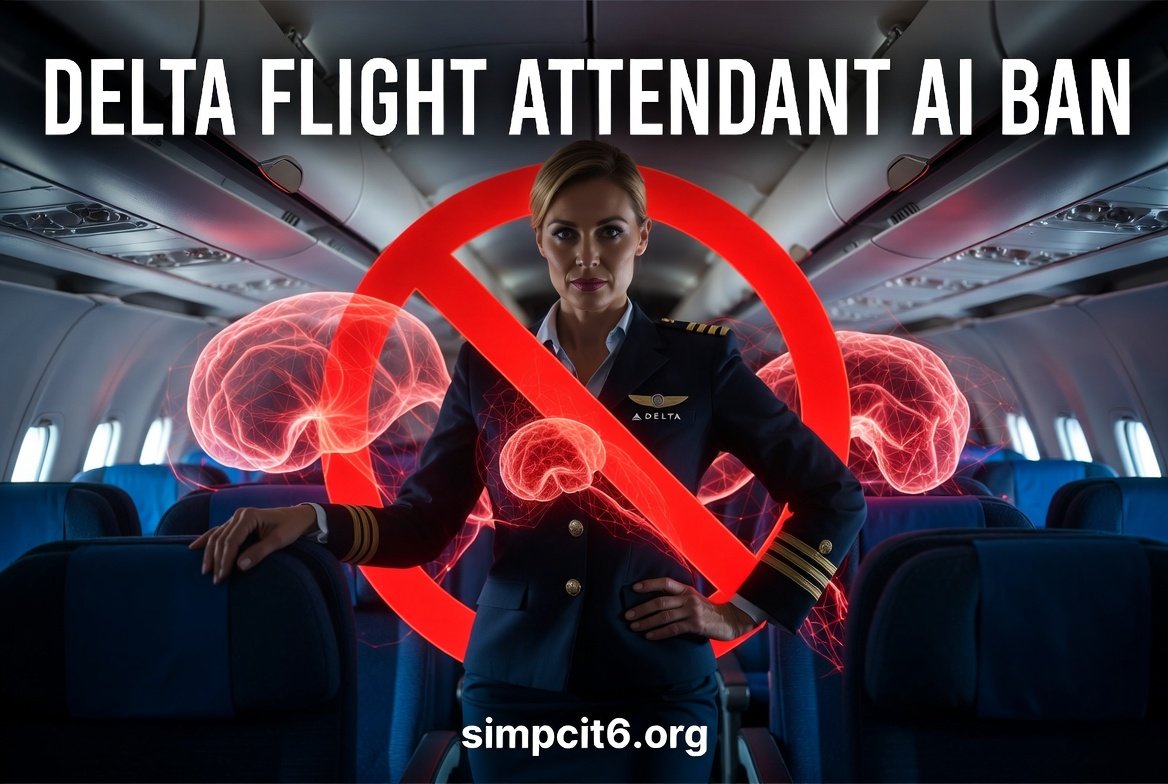
Wearable tech is everywhere now, even on airplanes. That is exactly why the delta flight attendant ai ban made headlines recently. Delta Air Lines told its crew members something surprising. Personal AI-powered smart glasses are no longer allowed during work hours. This might sound small, but it actually says a lot about privacy and safety in the sky. In this article, we break down exactly what the delta flight attendant ai ban covers. We will explain why Delta made this choice, how it affects crew members, and what it means for passengers too. You will also learn how smart glasses work and why airlines are paying closer attention to them. By the end, you will fully understand this new rule in simple, clear language. Let’s dive into the details together, one step at a time.
Table of Contents
What Is the Delta Flight Attendant AI Ban?
The delta flight attendant ai ban stops crew members from wearing personal smart glasses while working. This includes popular devices like Meta Ray-Ban glasses and similar AI-powered eyewear. Delta made this rule clear across its entire global operation. Unless the airline provides the device itself, staff cannot wear it on duty. Right now, Delta has not approved any smart glasses for employee use. This means the delta flight attendant ai ban currently acts like a full block on personal AI eyewear. The rule applies to flight attendants and other front-line staff. Delta explained that the decision came from an ongoing review focused on safety and security. This step shows how seriously the airline treats new technology inside the cabin. It also reflects growing concerns across the entire aviation industry about wearable AI devices.
Why Did Delta Create This New Policy?
Understanding the reason behind the delta flight attendant ai ban helps make sense of the whole situation. Smart glasses often look just like regular eyewear. However, many models include hidden cameras and microphones. Some can even connect to AI assistants for real-time information. Delta worried about how these features could affect passenger privacy. A camera hidden inside glasses could record people without their knowledge. This raises serious concerns, especially inside an airplane cabin. Passengers expect a certain level of privacy while flying. The delta flight attendant ai ban helps protect that expectation. Delta also mentioned safety and security as key reasons behind the decision. Combining these concerns, the airline decided a full ban made more sense than allowing limited or unclear use of personal smart eyewear.
How Smart Glasses Actually Work
To fully understand the delta flight attendant ai ban, it helps to know how these devices function. Smart glasses often include tiny built-in cameras. Some models offer high-quality video recording, similar to a smartphone camera. They may also include speakers that connect directly to AI systems. This lets the wearer ask questions or get instant information hands-free. Many devices include a small light meant to show when recording is active. However, this indicator light is often hard to notice in bright environments. Some people have also tried covering or blocking this light entirely. This creates uncertainty about whether recording is actually happening. Given these concerns, it becomes easier to understand why the delta flight attendant ai ban focuses so heavily on hidden recording risks inside a shared cabin space.
Privacy Concerns Behind the AI Glasses Debate
Privacy sits at the center of the delta flight attendant ai ban conversation. Airplane cabins are unique spaces. Passengers sit close together for hours at a time. Nobody wants to worry about being secretly recorded during a flight. Smart glasses make this concern more realistic than ever before. Even with a recording light, many passengers simply would not notice it. This creates an uncomfortable situation for everyone onboard. Crew members also deserve privacy while working. The delta flight attendant ai ban protects both sides of this relationship. It removes uncertainty about whether recording devices are active nearby. This kind of clear rule helps build trust between airline staff and travelers. Trust matters greatly in customer service roles, especially in tight, shared spaces like an airplane cabin during long flights.
Safety and Security Reasons Behind the Ban
Privacy is not the only concern tied to the delta flight attendant ai ban. Safety also plays a major role in Delta’s decision. Flight attendants must stay focused during emergencies and daily tasks alike. Any distracting technology could interfere with quick decision-making. Smart glasses connected to AI assistants might create unexpected notifications or distractions. In a job where focus matters this much, even small distractions carry real risk. Security concerns also come into play here. Devices capable of recording or transmitting data could create unknown vulnerabilities. International flights make this even more complex, since privacy laws vary by country. The delta flight attendant ai ban simplifies this challenge. Instead of managing different rules for different regions, Delta created one clear standard for the entire crew, no matter where they are flying.
How This Ban Affects Delta Flight Attendants
Flight attendants now must follow the delta flight attendant ai ban strictly during working hours. Personal smart glasses cannot be worn while assisting passengers or performing duties. This includes popular consumer models many people already own personally. For crew members interested in this technology, the rule may feel restrictive. However, many understand the reasoning behind workplace safety and privacy concerns. Delta has not banned future airline-approved wearable technology entirely. This leaves room for potential company-issued devices later on. If that happens, crew members could use approved smart glasses designed specifically for work tasks. For now, though, the delta flight attendant ai ban means no personal AI eyewear is allowed at all. Crew members must rely on standard tools and communication methods during their shifts instead.
Comparing Delta’s Policy to Other Airlines
So far, Delta stands out as one of the first major airlines to create this kind of policy. The delta flight attendant ai ban has not been matched by many other carriers yet. Some airlines experimented with wearable tech years ago, but none led to lasting adoption. Air New Zealand once explored smart glasses for showing passenger preferences instantly. Virgin Atlantic also tested early versions using Google Glass technology. Neither program continued long-term. This history shows that wearable tech in aviation has struggled to take off before. Delta’s decision reflects lessons learned from these earlier attempts. By setting clear rules early, Delta hopes to avoid confusion before the technology becomes more common. Other airlines may eventually follow with similar policies as AI-powered wearables continue growing in popularity worldwide.
What This Means for Passengers
Passengers benefit directly from the delta flight attendant ai ban, even if they never notice it. Knowing that crew members cannot wear hidden recording devices adds peace of mind. This matters greatly during long or crowded flights. Passengers already deal with limited personal space in the cabin. Removing uncertainty about recording devices helps reduce unnecessary stress. Interestingly, Delta has also clarified rules about passengers recording crew members. Flight attendants cannot force passengers to stop taking photos or videos in most situations. This creates an interesting contrast within Delta’s overall policies. While crew members face strict rules about personal AI eyewear, passengers retain more freedom regarding their own devices. Together, these policies show Delta trying to balance privacy, safety, and personal freedom across very different groups of people sharing the same space.
The Bigger Picture: AI Technology in Aviation
The delta flight attendant ai ban is part of a much larger conversation about artificial intelligence in daily life. Wearable AI devices are becoming more common every year. Companies continue releasing smarter, smaller, and more powerful gadgets. Airlines must decide how to handle this fast-moving technology responsibly. Aviation already involves strict rules around safety and data protection. Adding wearable AI devices creates new challenges nobody has fully solved yet. Delta’s response shows a cautious, safety-first approach rather than rushing to adopt new gadgets. This mindset often works well in industries where mistakes can carry serious consequences. As AI technology keeps evolving, expect more airlines to create similar policies. The delta flight attendant ai ban may end up shaping future industry standards around wearable technology in the years ahead.
Could Delta Approve Smart Glasses in the Future?
Interestingly, the delta flight attendant ai ban does not permanently block all smart glasses forever. Delta specifically mentioned that company-approved devices could become possible later. This means the airline remains open to future technology, as long as it meets strict safety and privacy standards. If Delta eventually issues its own smart glasses, crew members could use approved features for real tasks. This might include instant access to passenger preferences or translation tools during international flights. For now, though, no such technology has been approved. The delta flight attendant ai ban remains a full restriction on personal devices only. This balanced approach shows Delta is not against AI technology itself. Instead, the airline wants full control over how, when, and why such devices get used inside its operations.
Quick Facts Table: Delta Flight Attendant AI Ban Overview
| Detail | Information |
| Policy Name | Delta flight attendant AI ban |
| Airline | Delta Air Lines |
| What Is Banned | Personal AI-powered smart glasses during duty |
| Devices Affected | Meta Ray-Ban, Apple Vision Pro, and similar smart eyewear |
| Who It Applies To | Flight attendants and other front-line staff |
| Main Reasons | Privacy, safety, and security concerns |
| Company-Issued Devices | Not currently approved, but possible in the future |
| Passenger Photo Rule | Passengers can still photograph crew in most situations |
| Industry Comparison | One of the first major airlines with this specific policy |
| Policy Status | Active and enforced across Delta’s global operations |
Frequently Asked Questions
1. What exactly does the delta flight attendant ai ban cover? It stops crew members from wearing personal AI-powered smart glasses, like Meta Ray-Ban models, while working.
2. Why did Delta create this policy? Delta cited privacy, safety, and security concerns tied to hidden cameras and microphones inside smart glasses.
3. Does this rule apply to passengers too? No, the ban only applies to flight attendants and other front-line Delta employees, not passengers.
4. Can flight attendants ever use smart glasses again? Possibly. Delta has left room for company-approved devices in the future, though none are approved right now.
5. Are other airlines following Delta’s example? Not yet in a major way, though Delta’s move may influence future policies across the aviation industry.
6. Does the delta flight attendant ai ban mean AI itself is banned on flights? No, it specifically targets personal wearable AI eyewear, not AI technology used elsewhere in Delta’s operations.
Final Thoughts
The delta flight attendant ai ban shows how seriously airlines are starting to treat new AI technology. Privacy, safety, and trust all played a role in this decision. Crew members must now leave personal smart glasses at home during work hours. Passengers, meanwhile, gain a little extra peace of mind while flying. As wearable AI keeps growing more popular, expect more airlines to face similar decisions soon. If this article helped you understand the delta flight attendant ai ban clearly, share it with a fellow traveler or aviation fan. Stay curious, stay informed, and keep an eye on how technology continues shaping air travel.
