

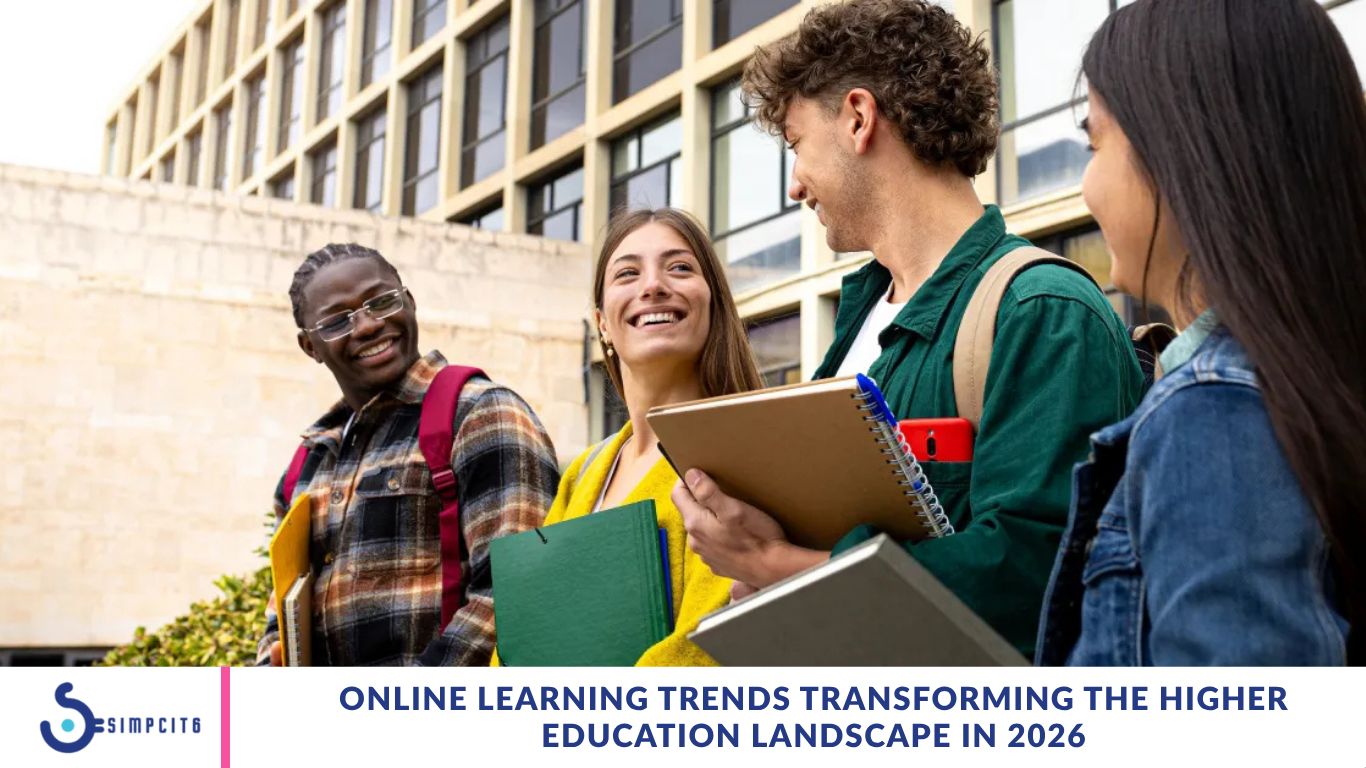
Not long ago, online learning in higher education was viewed as a secondary option. Today, it stands as a core pillar shaping how universities deliver education.
Across the globe, institutions have rapidly redefined their teaching models. What started as emergency remote learning has evolved into a fully developed, technology-driven education ecosystem powered by innovation and accessibility.
Modern students now engage in virtual classrooms, attending lectures from bedrooms, libraries, cafés, and even across international borders. This shift has expanded opportunities, enabling flexible learning environments and global academic access like never before.
Why Online Learning Is Here to Stay
Was online learning merely a temporary response to global disruptions? Absolutely not.
Today, students crave flexibility, and employers prioritize digital skills. Universities are also embracing the cost efficiency of virtual programs. The outcome is clear: online education is no longer a backup plan—it has become a strategic priority in higher education.
The Rise of Hybrid and Blended Learning
What Is Blended Learning?
Blended learning mixes online lessons with traditional in-person classes. It’s not completely virtual, but it’s not fully classroom-based either—offering the best of both worlds.
Benefits of Combining Online and On-Campus Learning
Students enjoy flexibility while still experiencing face-to-face interaction. Lectures can be accessed online, and hands-on workshops take place on campus, boosting both accessibility and knowledge retention.
This approach also promotes self-directed learning. You control your schedule but still benefit from structured guidance and support from instructors.
Growth of Micro-Credentials and Short Courses
What Are Micro-Credentials?
Micro-credentials are short, focused certifications designed to validate specific skills. Instead of pursuing a full four-year degree for every skill upgrade, students can complete targeted programs that are fast, practical, and career-focused.
Why Students Prefer Short-Term Certifications
Modern learners prioritize speed and relevance. Skills like data analytics, digital marketing, or coding can now be mastered in months rather than years. These short-term courses allow students to adapt quickly to evolving industry demands.
Industry Recognition and Career Benefits
Employers increasingly view micro-credentials as credible proof of practical expertise. In rapidly changing fields, up-to-date certifications can often outweigh outdated degrees, giving learners a competitive edge in their careers.
Artificial Intelligence in Online Education
Personalized Learning Experiences
Artificial Intelligence (AI) is transforming online education by creating personalized learning paths. Adaptive learning platforms track student performance and adjust content in real time.
Struggling with a topic? The system offers extra resources and guidance. Excelling in a subject? It lets you advance faster. The experience is like having a private tutor available 24/7.
AI-Powered Assessments
AI tools grade assignments, provide instant feedback, and pinpoint learning gaps, making evaluation faster and more accurate.
Chatbots and Virtual Assistants
Virtual assistants and chatbots answer student questions immediately—whether about deadlines, course materials, or technical issues.
With these innovations, education is becoming smarter, more adaptive, and highly responsive to individual learner needs.
Expansion of Global Classrooms
Cross-Border Learning Opportunities
Online learning breaks geographical barriers, allowing students to enroll in programs from universities thousands of miles away—without ever relocating. The world truly becomes your global campus.
Cultural Diversity in Virtual Classrooms
Virtual classrooms connect learners from diverse cultural and professional backgrounds. Discussions become richer, perspectives expand, and collaboration takes on a global dimension.
This kind of exposure equips students with the skills and adaptability needed for international workplaces, preparing them for a competitive, interconnected world.
Read also: Journaling for Mental Clarity – Beginner’s Step-by-Step Guide to Focus and Reduce Stress
Increased Focus on Student Engagement
Interactive Tools and Gamification
Traditional, static lectures are becoming a thing of the past. Modern online courses use quizzes, simulations, and gamified elements to keep learners engaged. This makes learning interactive and immersive rather than passive.
Live Discussions and Collaborative Projects
Features like live webinars, breakout rooms, and group assignments bring the classroom experience into the digital space. Active participation isn’t just encouraged—it’s essential for mastering the material.
Mobile Learning and Accessibility
Learning on Smartphones and Tablets
Students no longer rely on desktops to access education. Mobile-optimized platforms enable learning anytime, anywhere.
Waiting for a bus? Review lecture notes. On a short work break? Watch a recorded class. Education now adapts to your lifestyle, not the other way around.
Expanding Access to Remote and Underserved Areas
Online education opens doors for students in rural or underserved regions. High-quality higher education is no longer limited by location.
This democratization of learning is reshaping opportunities and making education more inclusive and accessible than ever before.
Data-Driven Decision Making in Universities
Learning Analytics
Universities now leverage learning analytics to track engagement, completion rates, and performance trends. This allows educators to identify struggling students early and intervene proactively, rather than reactively.
Enhancing Course Design with Data
When analytics reveal drop-offs in specific modules, instructors can redesign courses to improve engagement and retention. By using data-driven insights, course improvements become strategic, continuous, and measurable, turning guesswork into actionable results.
Subscription-Based Education Models
Flexible Payment Structures
Many institutions now offer subscription-based course access, allowing students to pay monthly and learn at their own pace. This approach reduces financial barriers and makes higher education more accessible.
Lifelong Learning Opportunities
Learning doesn’t stop at graduation. Professionals increasingly return to online programs to update and expand their skills. Online platforms make lifelong learning convenient, flexible, and scalable, supporting career growth and continuous personal development.
Challenges of Online Learning
Digital Divide
Not every student has reliable internet or access to the necessary devices, creating a digital gap that leads to inequality. Addressing this divide remains a major challenge for educators and institutions.
Academic Integrity Challenges
Online assessments bring concerns about cheating and authenticity. Universities are continuously developing secure testing technologies to ensure fair evaluation.
Mental Health and Screen Fatigue
Long hours in front of screens can lead to fatigue, reduced focus, and stress. Social isolation may further impact mental well-being. Balancing online learning with offline activities is crucial for maintaining both health and productivity.
The Future of Online Learning
Virtual Reality and Immersive Learning
Virtual Reality (VR) is poised to revolutionize online education, turning virtual classrooms into fully immersive learning environments. Students could conduct virtual science experiments or explore historical sites digitally, making learning hands-on and experiential rather than purely theoretical.
The Rise of Digital Degrees
Digital degrees are gaining recognition and credibility. Employers increasingly value online qualifications, acknowledging the discipline, technical skills, and adaptability required to earn them. The old stigma surrounding online education is steadily disappearing, making virtual learning a respected path in higher education.
Frequently Asked Questions
What are the key online learning trends in higher education for 2026?
Key trends include blended learning, micro-credentials, AI-powered personalized learning, mobile and tablet accessibility, gamification, cross-border learning, and data-driven course improvements.
How is blended learning shaping higher education in 2026?
Blended learning combines online instruction with in-person classes, offering students flexibility, engagement, and hands-on experiences while maintaining structured academic support.
Why are micro-credentials becoming popular in higher education?
Micro-credentials provide short-term, skill-focused certifications that are career-oriented, fast, and practical, allowing students to adapt quickly to evolving industry demands.
How is AI improving online learning experiences?
AI-driven platforms personalize learning by tracking student performance, offering adaptive content, AI-powered assessments, and virtual tutoring, which makes learning more efficient and tailored.
Can online learning reach students in remote or underserved areas?
Yes. Online education removes geographical barriers, providing high-quality programs to rural and underserved regions, promoting inclusive access and global learning opportunities.
What role does gamification play in online education?
Gamified elements, quizzes, and interactive simulations increase student engagement, making learning more interactive, fun, and effective compared to traditional passive lectures.
How do mobile devices impact online learning?
Students can now access lectures, notes, and assignments on smartphones and tablets, enabling learning anytime, anywhere and integrating education seamlessly into daily life.
Conclusion
Online learning is no longer just a temporary solution—it has become a central force transforming higher education in 2026. From blended learning and micro-credentials to AI-driven personalization, gamification, and mobile access, students now enjoy flexible, engaging, and globally connected learning experiences.
